
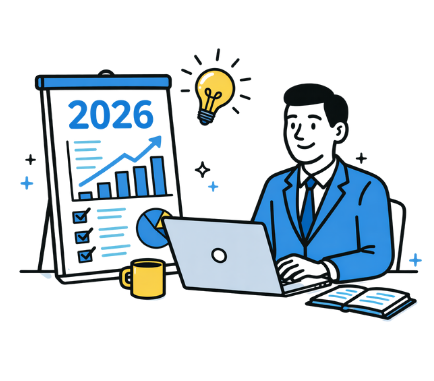
New Year, new business plan. That how it goes in your business, right?
As the calendar flips to 2026, business planning for the year ahead takes on a high degree of importance. With rapid changes in technology, shifting consumer confidence, rising operating costs, global uncertainty and a tightening labour market throughout 2024–25, the year ahead demands more than a quick refresh of last year’s strategy. Rather, it calls for a sharp, agile and data-driven business plan that sets up your business for growth and stability. Whether you operate a café, construction firm, not-for-profit, or tech startup, a well-structured 2026 business plan will help you make smarter decisions, access funding, manage risk and keep your team aligned on what matters.
Where are you now?
Before setting goals for 2026, take an honest, no holds barred look at how the business performed in 2025, so you can start with evidence, not assumptions. Don’t gloss over weaknesses; a realistic baseline is the foundation of a useful. That means looking at revenue trends and profit margins, customer acquisition and retention, staffing patterns, turnover and capability gaps and market changes that affected your business
Decide where you want to go.
For many business owners that I speak with, there is little clarity on what they want from their businesses and where they want it to go. These are vague ideas and statements, but specific goals and targets that can be tracked, shared and measured. Go deep into sales targets, costs and other key metrics that everyone can follow. Include major transformation projects that adopt technology, target new markets, diversify, add new products or develop your team.
Strengthen your business model
A good 2026 plan should clearly explain how your business makes money—and how it will continue to. Review each element of your business model, including revenue streams, pricing strategy, cost structure, staffing requirements, key partnerships, technology and systems and compliances. Identify where margins are weakening, where automation or outsourcing may help and where new offerings could strengthen stability.
Review your target customers
Customer behaviour can shift quickly, especially in tourism, hospitality, retail and community services. Updating your understanding of who buys from you, what they need and what they’re willing to pay is crucial. Are your customers the same as last year? Have new customer groups emerged? What problems are they trying to solve? Are competitors offering something more appealing?
Marketing and sales plan
In 2026, successful marketing isn’t about doing more (or paying more), it’s about doing what works. Audit your current channels and stop investing in platforms that generate little return. Go back to basics and looks at your brand position, key messages, what’s working/not and how much you are paying for customer acquisition.
Keep it simple.
There is no point creating a plan that you (or your team) never look at. Use formats and styles that work in your business, whether it’s flow charts, spreadsheets or formal documents.
A new year is a rare moment to step back, reset and bring clarity to your business. A strong 2026 business plan keeps your team aligned, helps you prioritise what matters and gives lenders, partners and investors confidence that you’re steering the ship with purpose. Treat the plan as a living document—review it quarterly, adjust it as the market shifts and use it to guide everyday decision-making. With the right plan in place, 2026 can be your strongest year yet.
I am text block. Click edit button to change this text. Lorem ipsum dolor sit amet, consectetur adipiscing elit. Ut elit tellus, luctus nec ullamcorper mattis, pulvinar dapibus leo.